Fly Fishing Tippet: Size, Material, and When to Use Each
By RiffleDge . 10 min read . Updated June 2026
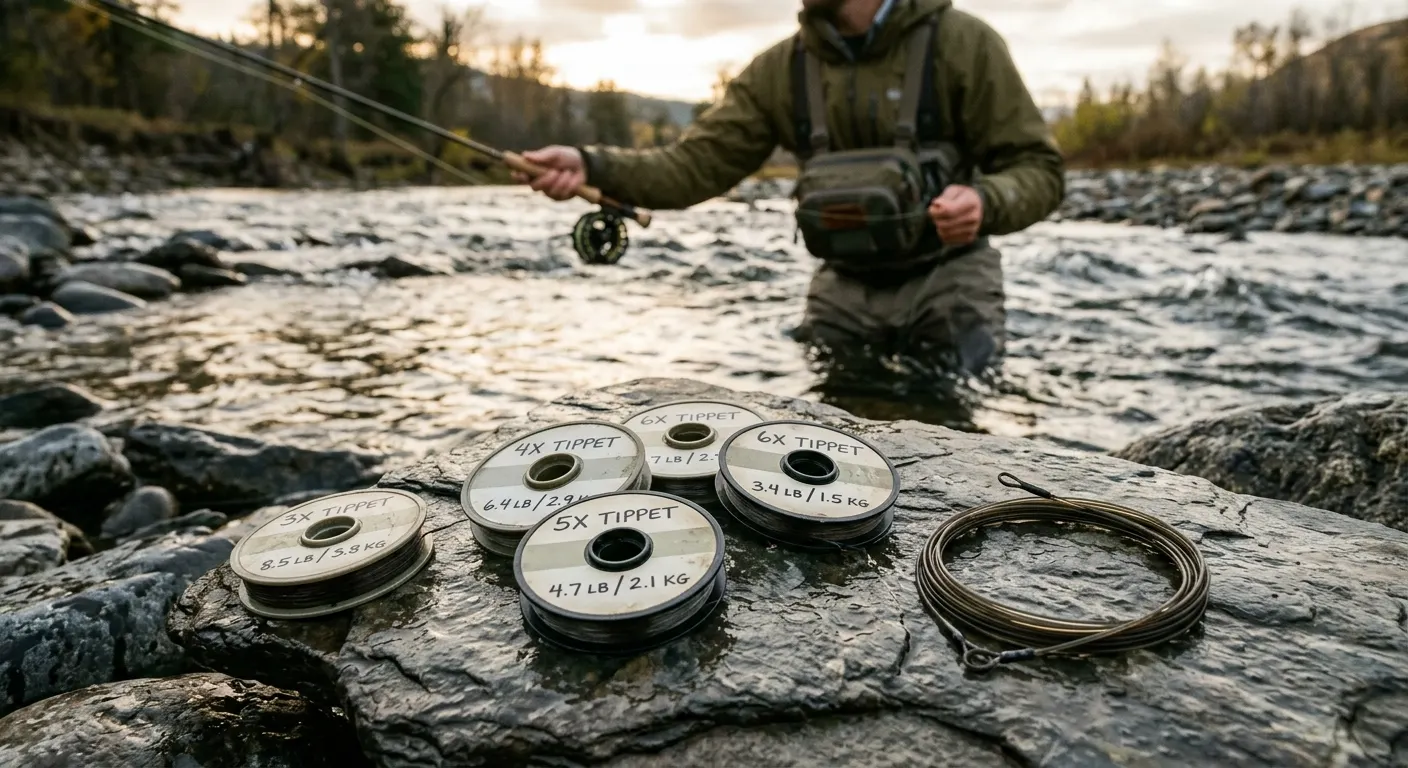
Tippet is the piece of the rig that the fly angler obsesses over and the non-angler ignores completely. It is the thin end of the leader system, the last several feet of line before the fly, and it determines whether a selective trout in flat water refuses your dry fly or takes it confidently. The wrong size looks unnatural, the wrong material sinks a dry fly or floats a nymph in the wrong zone, and cheap tippet breaks at the knot on the first serious fish. This guide cuts through the confusion with a clear size chart, a material decision tree, and the brands worth buying.
Quick answer
Use RIO Powerflex Plus Tippet monofilament for dry fly fishing in sizes 4X to 6X depending on fly size. Use RIO Fluoroflex Plus Tippet fluorocarbon for nymphs and streamers where you want the tippet to sink and stay nearly invisible underwater. Match fly hook size to tippet by dividing the hook number by 3 to get the tippet X-rating.
This guide contains affiliate links. RiffleDge may earn a commission at no cost to you.
How to match tippet size to fly size
The simplest rule is the rule of 3: divide the hook size by 3 to get the tippet X-rating. A size 18 Pale Morning Dun divided by 3 equals 6, so 6X tippet. A size 12 Royal Wulff divided by 3 equals 4, so 4X. In practice this works well for most situations and is easy to remember mid-stream when you are making the call quickly.
In flat, clear water with spooky fish, go one size finer than the formula suggests. In broken pocket water with heavy current, go one size heavier to handle the tension and abrasion. In wind, use heavier tippet to turn over the fly cleanly despite the air resistance. The formula is a starting point, not a mandate.
Common size reference: 6X and 7X for small midges and tricos in size 20 to 26, which is most appropriate for tailwater and spring creek fishing. 5X for most standard dry flies in size 14 to 18. 4X for larger dry flies, caddis, and stoneflies in size 10 to 14. 3X and heavier for streamers and heavy nymph rigs.
Monofilament versus fluorocarbon: the material decision
Monofilament nylon is buoyant, stretchy, and more supple than fluorocarbon. It floats in or near the surface film, which is exactly what a dry fly needs. The nylon stretch cushions the hook set on light 5X and 6X tippet, preventing the tip-break that kills a light leader on a strong fish. RIO Powerflex Plus Tippet is the community standard for monofilament: consistent diameter, reliable knot strength, and available in every tippet size from 0X to 7X.
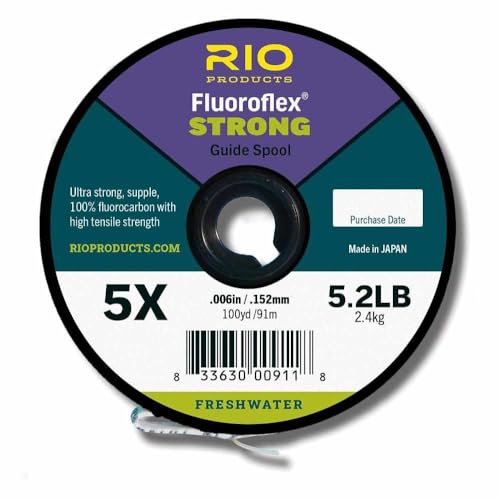
Fluorocarbon is denser than water and sinks, has a refractive index close to water making it nearly invisible underwater, and is more abrasion-resistant than monofilament. This makes it the correct material for nymphing and streamer fishing where you want the tippet below the surface film and less visible to a trout you are approaching head-on. RIO Fluoroflex Plus Tippet is the premium fluorocarbon choice with high knot strength and reliable diameter consistency.
The budget fluorocarbon option many anglers use is Seaguar InvizX Fluorocarbon Tippet , sold as fishing mainline rather than fly fishing tippet but 100 percent fluorocarbon with consistent diameter. At $18 to $25 for 200 yards it delivers eight times more material per dollar than fly-shop tippet. The Fishpond Headgate Tippet Holder with RIO Powerflex Tippet is a pre-loaded five-size system that covers 2X through 6X with RIO Powerflex tippet in one purchase.

RIO Powerflex Plus Tippet
The most widely recommended nylon monofilament tippet in fly fishing, offering consistent diameter, reliable knot strength, and enough stretch to cushion the hook set on light tippets.
RIO Fluoroflex Plus Tippet
A high-performance 100 percent fluorocarbon tippet from RIO with low visibility underwater and high knot strength for subsurface nymph and streamer applications.

Seaguar InvizX Fluorocarbon Tippet
A budget-friendly 100 percent fluorocarbon used by savvy anglers as a high-value tippet alternative, delivering 200 yards per spool for roughly $22 compared to fly-shop pricing for 25 yards.

Fishpond Headgate Tippet Holder with RIO Powerflex Tippet
A combination tippet holder and dispenser from Fishpond that comes pre-loaded with five spools of RIO Powerflex tippet from 2X through 6X for a single-box tippet station on the vest or pack.
Guide spools and budget-per-yard math
Standard 30-yard tippet spools are the default purchase at fly shops but they run out faster than you expect on a day with heavy pattern changes or a long trip with multiple fish brought to hand. For anyone fishing more than a handful of days per season, the per-yard math on a RIO Powerflex Tippet Guide Spool (110-yard) is meaningfully better: 110 yards per spool for roughly two-thirds the price of three standard spools.
The RIO Powerflex Tippet (Standard 30-yard Spool) is still the right choice for occasional anglers who fish a few days per year and want a spool that stores easily in a vest pocket. For high-volume use, the guide spool is simply more economical.
Set up your vest or pack with a Fishpond Headgate Tippet Holder with RIO Powerflex Tippet that mounts to the front and lets you pull tippet from any size with one hand while the holder stays clipped in place. Pulling tippet from a rotating dispenser spool prevents the tangled loop that comes from pulling from a static spool under tension.
RIO Powerflex Tippet Guide Spool (110-yard)
A 110-yard guide spool of RIO Powerflex nylon monofilament, the bulk option for frequent anglers who go through multiple 30-yard spools per season and want better per-yard value.
RIO Powerflex Tippet (Standard 30-yard Spool)
The standard 30-yard spool of RIO Powerflex nylon monofilament, the everyday choice for anglers who buy tippet by the spool and rotate sizes frequently during a day on the water.
Fishpond Headgate Tippet Holder with RIO Powerflex Tippet
A combination tippet holder and dispenser from Fishpond that comes pre-loaded with five spools of RIO Powerflex tippet from 2X through 6X for a single-box tippet station on the vest or pack.
CDC flies and the floatant connection
One of the most common tippet mistakes is paired with a floatant mistake. CDC-winged dry flies require monofilament tippet so the tippet does not sink and drag the delicate fly wing under. Then many anglers apply an oil-based gel floatant like Gehrke's Gink Fly Floatant to a CDC pattern, which mats the fibers flat and kills the fly's floating ability entirely.
The correct pairing is RIO Powerflex Plus Tippet in 5X or 6X for the tippet, and either Loon Outdoors Lochsa Floatant for initial treatment before the first cast or Frog's Fanny Dry Fly Floatant for reviving a drowned fly mid-session. Never put a gel-based floatant on a CDC-winged pattern. This detail makes the difference between a CDC Elk Hair Caddis that floats through 10 drifts and one that sinks on the third.
RIO Powerflex Plus Tippet
The most widely recommended nylon monofilament tippet in fly fishing, offering consistent diameter, reliable knot strength, and enough stretch to cushion the hook set on light tippets.

Loon Outdoors Lochsa Floatant
A CDC-specific floatant that coats the delicate fibers of CDC-winged and parachute patterns without matting them, keeping fine-fiber flies floating through multiple drifts.

Frog's Fanny Dry Fly Floatant
A powder desiccant floatant for reviving waterlogged flies mid-session and treating CDC and deer hair patterns that oil-based gels will ruin by matting the fibers.
Gehrke's Gink Fly Floatant
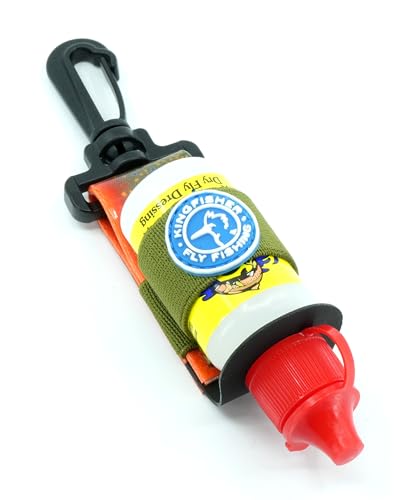
The classic oil-based gel floatant that has been a staple of fly fishing vests since the 1970s. Works well on standard hackled and elk-hair dry flies in warm conditions.
Cutting tippet cleanly with the right nipper
Bad tag ends on tippet knots happen most often when the cutting tool is dull. A nipper that cannot cut fluorocarbon cleanly leaves a frayed tag that catches current and creates drag on the presentation. The Dr. Slick Cyclone Nipper with its ceramic cutting edge cuts fluorocarbon as cleanly as it cuts monofilament, without the dulling-on-fluorocarbon problem that kills cheap stainless nippers within a season.
Attach your nipper to a Loon Outdoors Rogue Zinger retractor on your vest or pack so it is always at hand without requiring a hand in a pocket. Changing flies should take 30 seconds, not 90, and a retractor nipper with a clean cut makes that possible.

Dr. Slick Cyclone Nipper
A precision fly fishing nipper with a ceramic cutting edge that stays sharp far longer than stainless steel, plus a hook eye cleaning needle built into the handle for clearing varnish from small hooks.

Loon Outdoors Rogue Zinger
A heavy-duty zinger retractor with a 22-inch steel cable and an S-Biner attachment for attaching nippers, hemostats, or a hook sharpener to a vest or pack with instant pull-and-release access.
Featured in this guide
RIO Powerflex Plus Tippet
The most widely recommended nylon monofilament tippet in fly fishing, offering consistent diameter, reliable knot strength, and enough stretch to cushion the hook set on light tippets.
RIO Fluoroflex Plus Tippet
A high-performance 100 percent fluorocarbon tippet from RIO with low visibility underwater and high knot strength for subsurface nymph and streamer applications.
RIO Powerflex Tippet Guide Spool (110-yard)
A 110-yard guide spool of RIO Powerflex nylon monofilament, the bulk option for frequent anglers who go through multiple 30-yard spools per season and want better per-yard value.
Seaguar InvizX Fluorocarbon Tippet
A budget-friendly 100 percent fluorocarbon used by savvy anglers as a high-value tippet alternative, delivering 200 yards per spool for roughly $22 compared to fly-shop pricing for 25 yards.
Fishpond Headgate Tippet Holder with RIO Powerflex Tippet
A combination tippet holder and dispenser from Fishpond that comes pre-loaded with five spools of RIO Powerflex tippet from 2X through 6X for a single-box tippet station on the vest or pack.
Dr. Slick Cyclone Nipper
A precision fly fishing nipper with a ceramic cutting edge that stays sharp far longer than stainless steel, plus a hook eye cleaning needle built into the handle for clearing varnish from small hooks.
Keep reading
Related comparisons
Related roundups
FAQ
Frequently asked questions
What tippet size should I use for dry fly fishing?+
Match tippet size to fly size using the rule of dividing the fly hook size by 3: a size 18 dry fly wants roughly 6X tippet. For larger dry flies in size 12 to 16, 4X or 5X is typically right. In flat, clear water with spooky fish, drop one size finer. In broken pocket water, go one size heavier to handle the current pressure and abrasion.
Fluorocarbon or monofilament tippet for trout?+
Monofilament works best for dry fly fishing because it floats in the surface film rather than sinking. Fluorocarbon is denser and sinks, making it better for nymphs and streamers where you want the tippet below the film. The reduced visibility of fluorocarbon matters most in ultra-clear flat water. For rough pocket water, monofilament nylon does the job well for both surface and subsurface presentations.
How often should I replace my tippet?+
Replace any tippet section after a strong break-off or after you notice coiling from being stored compressed. Standard practice is to test the last few inches at the start of each trip by tugging and trimming back a foot if it feels stiff or kinked. Most anglers go through one 30-yard spool per two to three active fishing trips, making tippet one of the most important recurring purchases each season.
Is the Seaguar InvizX a legitimate fly fishing tippet?+
It is sold as a fishing mainline, not fly fishing tippet, but it is 100 percent fluorocarbon with consistent diameter and good knot strength. At roughly $18 to $25 for 200 yards it delivers far more footage per dollar than fly-shop-branded fluorocarbon tippet spools. The trade-off is a larger spool not sized for vest pockets, so many anglers wind smaller amounts onto a Loon or Fishpond tippet holder. For budget-focused anglers who fish fluorocarbon heavily, it is a legitimate cost-saving option.
What is the difference between a leader and tippet?+
A leader is the tapered monofilament section connecting your fly line to the fly, usually 9 to 12 feet long and tapering from a thick butt to a thin tip. Tippet is the uniform-diameter material you add to the thin tip of the leader to preserve its length as you change flies. You buy leaders as finished tapered pieces and buy tippet in spools to add to the leader end.