Best Fly Floatants for Dry Fly Fishing
Floatant is the small bottle that decides whether your dry fly rides the film for one drift or twenty. The right product depends on the fly: oil-based gels coat standard hackle and elk hair beautifully but mat the delicate fibers of a CDC wing, while powder desiccants revive a drowned fly and treat CDC without collapsing it. This group covers gel, powder, and CDC-specific options so you can match the floatant to the pattern instead of forcing one product onto every fly.
RiffleDge may earn a commission from links below . Updated September 2026
What is the best Fly Floatants for Dry Fly Fishing?
Loon Outdoors Aquel is the best all-round gel floatant, a water-based formula that coats hackle without matting and stays workable in cold temperatures where oil-based gels stiffen up. For reviving a waterlogged fly or treating delicate CDC, the runner-up is Frogs Fanny, a powder desiccant you shake the fly in to send it back out dry in seconds.
 Top Pick
Loon Outdoors Aquel Premium Floatant
The default gel floatant for most fly fishers: water-based, easy to apply to hackle fibers, and stays liquid enough to use in cold temperatures where oil-based gels become stiff.
Best for Cold and moderate temperature dry fly fishing where you need a gel floatant that stays workable in your hands.
 2
2 Frog's Fanny Dry Fly Floatant
A powder desiccant floatant for reviving waterlogged flies mid-session and treating CDC and deer hair patterns that oil-based gels will ruin by matting the fibers.
Best for Any angler who fishes CDC patterns or needs to quickly revive a drowned dry fly without leaving the run.
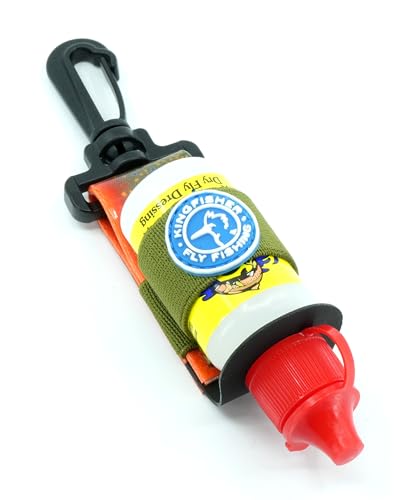 Best Value
Gehrke's Gink Fly Floatant
The classic oil-based gel floatant that has been a staple of fly fishing vests since the 1970s. Works well on standard hackled and elk-hair dry flies in warm conditions.
Best for Warm-weather dry fly fishing with standard hackled patterns where the classic gel has decades of proven performance.
 4
4 Loon Outdoors Lochsa Floatant
A CDC-specific floatant that coats the delicate fibers of CDC-winged and parachute patterns without matting them, keeping fine-fiber flies floating through multiple drifts.
Best for Anglers who fish CDC midge, Comparadun, or Parachute Adams patterns regularly on flat, spring creek-style water.
The method
How we chose
We evaluated each option on fit, build quality, daily usability, and value. Our top pick, Loon Outdoors Aquel Premium Floatant, earned the spot. The cold-weather gel standard: does what Gink does in warmth, and keeps doing it when temperatures drop. The comparison above highlights exactly who each pick is best for.
Related guides
FAQ
Best Fly Floatants for Dry Fly Fishing: FAQ
Why can I not use one floatant for every dry fly?+
Because fly materials behave differently. Oil-based gels like Gink coat standard hackle and elk hair well but mat CDC and fine-fiber wings flat, killing their float. CDC and waterlogged flies need a powder desiccant like Frogs Fanny or a CDC-specific treatment like Loon Lochsa. Carrying a gel plus a powder covers nearly every dry fly you will fish.
Does floatant choice change in cold weather?+
Yes. Oil-based gels such as Gink thicken and get hard to apply below about 45 degrees Fahrenheit. A water-based gel like Loon Aquel stays fluid and usable in the cold, which is why it is the better pick for early-season and winter dry fly fishing. Keeping any floatant in an inner pocket near your body also helps it stay workable.